Home/Destinations
Where we go

Four places that between them hold most of Africa's birding

A swamp, a mahogany forest, a chain of soda lakes and an ancient montane rainforest. Different habitats, different bird families, different countries.

300+
Mabamba Bay Wetland
Uganda
360+
Budongo Forest
Uganda
450+
The Rift Valley Lakes
Kenya
300+
Nyungwe Forest
Rwanda
Mabamba Bay Wetland 01
The star attraction

Mabamba Bay Wetland

Uganda · Papyrus swamp

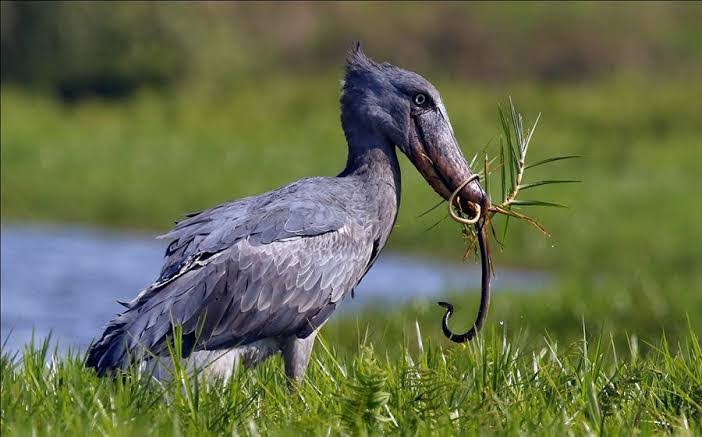
A Ramsar wetland of floating papyrus channels an hour from Entebbe, and one of the most reliable places on earth to stand within thirty metres of a Shoebill.

You explore by canoe, poled slowly through channels barely wider than the boat. The birds are the draw, but the human story is what guests talk about afterwards: the men guiding you grew up fishing this swamp, and many now earn more protecting it than they ever did taking fish from it. That shift — from extraction to guardianship — happened within one generation, and it is the clearest proof we have that birding tourism can pay for conservation rather than merely admire it.

Key species
  • Shoebill — the reason you came
  • Papyrus Gonolek — heard far more than seen
  • Blue-breasted Bee-eater — hunting the channel edges
  • African Fish Eagle — calling over open water

Once a Shoebill hunting ground. Now a protected Ramsar site.
Budongo Forest 02
The crown jewel

Budongo Forest

Uganda · Mature mahogany forest

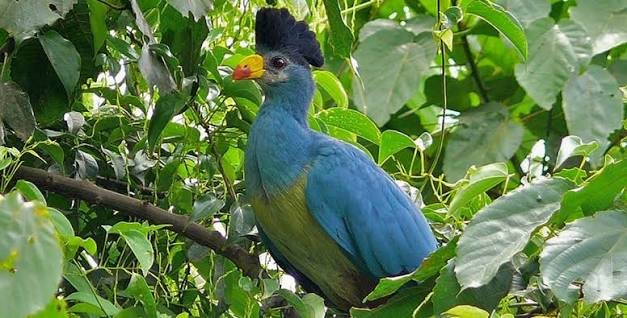
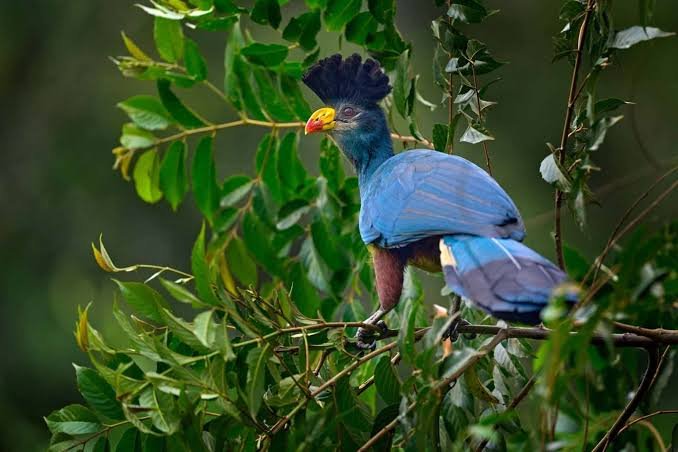
East Africa's premier forest birding destination, and home to the Great Blue Turaco — the bird on our logo, and the reason this company has the name it does.

The Royal Mile is a straight, wide, shaded track through mature canopy, and it is regularly named the finest forest birding trail in Africa. Its flatness matters more than it sounds: you can watch a canopy feeding party for twenty minutes without fighting the terrain. Mixed parties move through in waves, so the method is to stand still and wait rather than walk and hope. Budongo is also one of the oldest forests in East Africa, and it feels it.

Key species
  • Great Blue Turaco — our iconic species
  • African Crowned Eagle — over the canopy at midday
  • Nahan's Francolin — a Budongo speciality
  • African Pitta — seasonal, November to April
  • Chestnut-capped Flycatcher — in mixed feeding parties

One of the oldest forests in East Africa.

The Rift Valley Lakes 03
The spectacle

The Rift Valley Lakes

Kenya · Soda and freshwater lakes

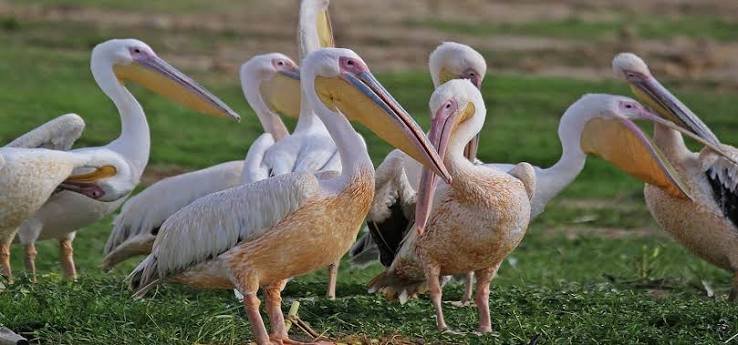
The soda lakes of the Great Rift produce Africa's most dramatic birding landscape — open water turned pink by flamingos, with the escarpment rising behind.

Bogoria and Nakuru are alkaline enough to grow the algae that Lesser Flamingos filter-feed on, and at peak the flocks run into the hundreds of thousands. Numbers swing with rainfall and water level, and we would rather tell you that in advance than sell you a photograph. Even in a quiet year the pelican rafts, the acacia woodland species and the cliff-nesting raptors make this the densest bird list of any region we visit.

Key species
  • Lesser Flamingo — in flocks that redraw the shoreline
  • Greater Flamingo — taller, paler, in smaller numbers
  • Great White Pelican — fishing cooperatively in rafts
  • African Fish Eagle — on nearly every freshwater lake
  • Grey Crowned Crane — on the surrounding grassland

More than a million flamingos at peak season.

Nyungwe Forest 04
The hidden gem

Nyungwe Forest

Rwanda · Montane rainforest

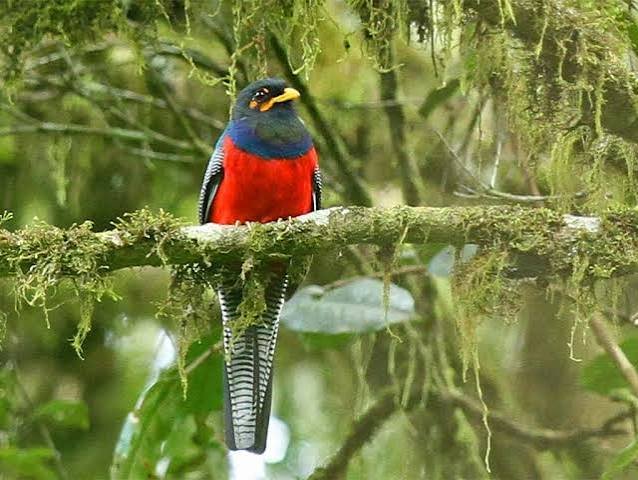
One of the oldest rainforests in Africa, draped in moss and orchids, holding Albertine Rift endemics found nowhere else on earth.

Nyungwe survived the last ice age when most African forest did not, which is why its endemism is so high. The canopy walkway — sixty metres of suspension bridge above the forest floor — is the single best birding structure in the region, because it puts you level with species that are otherwise silhouettes against the sky. Mist, moss, giant trees and a Rwenzori Turaco appearing in the canopy like a piece of stained glass.

Key species
  • Rwenzori Turaco — blue, green and impossible red
  • Grauer's Swamp Warbler — in the high-altitude marsh
  • Red-collared Mountain Babbler — an Albertine endemic
  • Great Blue Turaco — also resident here

A canopy walkway sixty metres above the forest floor.

All four in one journey

The Bird Year Grand Tour visits every one of these.

Twenty-one days across Uganda, Rwanda and Kenya — and the trip that puts a young African birder in the field for a year.